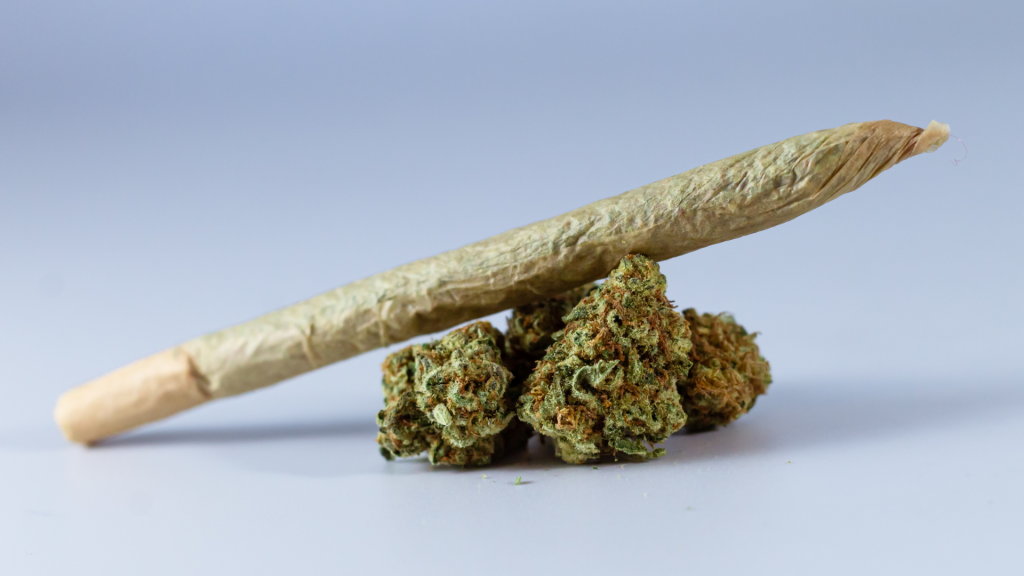
I’ve used both shrooms (available with Offerings) and weed long enough to know they’re totally different experiences. Weed feels like a soft wave, relaxing, sometimes funny, and often foggy. Shrooms, on the other hand, can feel like being dropped into another dimension. People often ask which one is worse, but that depends on what “worse” means. Are we talking about physical safety, mental health, or how wild the trip can get? Let’s break it down with both experience and science.
How They Work in the Brain
Weed’s main compound, THC, affects the brain’s endocannabinoid system, the same system that helps control mood, pain, and appetite. It mostly slows things down, which is why it chills people out.
Shrooms are powered by psilocybin, which turns into psilocin in the body. That chemical activates serotonin receptors, mainly 5-HT2A, which changes how your brain networks talk to each other. The result? Reality can feel like it’s breathing.
“Psilocybin temporarily disrupts rigid thought patterns and increases brain connectivity, often leading to vivid sensory and emotional experiences,” CNS Spectrums
Weed’s effects usually last a few hours, but psilocybin trips can go for six or more, depending on the dose. Both can make you introspective, but mushrooms take that to another level.
Safety and Risk
From a physical health point of view, neither is very dangerous. You can’t overdose on mushrooms the way you can on alcohol or opioids, and weed has no known fatal dose either. But that doesn’t mean they’re risk-free.
With weed, long-term heavy use can mess with memory, motivation, and mood. According to a 2024 review in European Archives of Psychiatry and Clinical Neuroscience, regular cannabis users show “dose-related cognitive impairment and increased risk of dependence” after long exposure.
Shrooms, on the other hand, aren’t addictive and rarely lead to dependence. The bigger issue is psychological, bad trips, anxiety, or confusion during use. But those effects usually fade once the trip ends.
“In controlled environments, psilocybin has shown a strong safety profile and a very low potential for misuse,” CNS Spectrums.
So physically, neither is “worse.” But mentally, shrooms can definitely hit harder if someone isn’t prepared.
Emotional Impact
Weed is like a mirror, it shows what’s on the surface. Shrooms dig a few layers deeper. I’ve had experiences that were beautiful and eye-opening, but also some that were emotionally tough. Psilocybin doesn’t let you hide from your thoughts; it brings them forward.
Cannabis, though, can sometimes heighten anxiety too, especially with strong strains high in THC. A 2024 study in the Journal of Psychopharmacology noted that “high-THC cannabis may trigger short-lived paranoia or panic in sensitive individuals.”
That lines up with real life. Weed can make people paranoid, while shrooms tend to make them reflective, or occasionally overwhelmed.
Addiction and Tolerance
Here’s where the two really differ. You can build a weed habit fast if you use it daily, and quitting can cause irritability or sleep issues. Mushrooms don’t cause that kind of dependence. You might build tolerance for a few days, but it resets quickly.
When you take mushrooms too often, the effects weaken fast. Your brain basically says, “Not again,” and shuts down the response. So most people don’t trip often, it’s self-limiting.
The Aftereffect
After weed, you might feel a little sluggish. After shrooms, you might feel emotionally light, calm, or even inspired. That’s not just talk, studies from Johns Hopkins and others found psilocybin can increase feelings of connection and optimism for weeks afterward.
But the wrong mindset can flip that. I’ve seen people go deep into an uncomfortable trip because they weren’t ready to face their emotions. Weed rarely does that, it’s more of a pause button than a mirror.
So, Are Shrooms Worse?
If you mean dangerous, not really. Both can be safe when used carefully, and both can cause problems if used recklessly. Weed can affect memory and motivation if you overdo it. Shrooms can trigger anxiety or confusion if you trip in the wrong setting.
But when it comes to long-term harm, psilocybin tends to come out cleaner. It’s not addictive, doesn’t cause withdrawal, and may even help with depression in clinical settings.
The real key is intention. Weed is casual, daily even. Shrooms are occasional and introspective. One is for unwinding, the other for understanding.
“Psilocybin’s risks are primarily psychological and situational, not pharmacological. Context defines outcome,” CNS Spectrums.
So no, shrooms aren’t “worse.” They’re just deeper, and with depth comes responsibility.
Sources
E. Hoch et. al. – 2024 – Cannabis, cannabinoids and health: a review of evidence on risks and effects
Seetal Dodd et. al. – 2022 – Psilocybin in neuropsychiatry: a review of its pharmacology, safety and efficacy – CNS Spectrums
David Wolinsky – 2023– The Psychedelic Effects of Cannabis: A Review of the Literature – Journal of Psychopharmacology
Read Our Other Articles