Figuring out the right shroom dosage can feel confusing at first, especially with all the different numbers floating around online. The truth is, dosing isn’t guesswork. Scientists actually study this stuff, using very specific measurements to understand what different amounts of psilocybin do to people. And honestly, what researchers found lines up pretty well with what most experienced users already know.
Let’s break everything down in simple, beginner friendly language, with a mix of real science and a little first hand insight.
How Scientists Measure Shroom Dosage
In research, psilocybin isn’t measured in grams of dried mushrooms. It’s measured in milligrams of pure psilocybin or in mg per kg of body weight. One clinical paper explained that studies typically use “single oral doses of 15 mg, 20 mg, 25 mg, or 30 mg,” which are carefully controlled amounts.
When converted, those doses roughly match the ranges people feel in real-world shroom use.
For example, a Lancet study used a weight-based dose of 0.215 mg per kilogram, which is basically a medium, therapeutic-level dose. I remember reading that and thinking: yeah, that definitely feels like the sweet spot most people talk about.
Translating Science to Real Shrooms
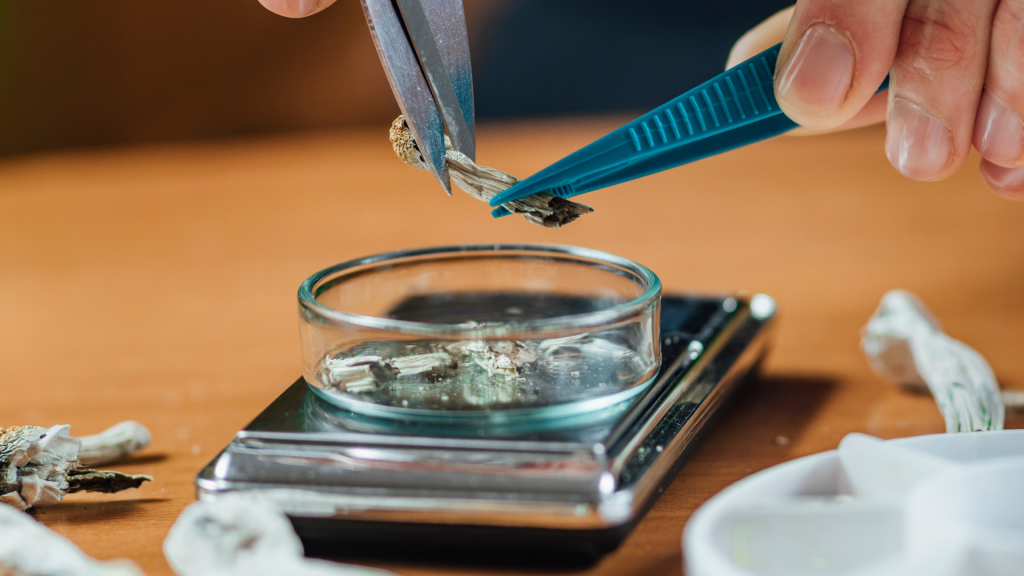
Now here’s where it gets practical. Regular dried magic mushrooms contain psilocybin, but the exact amount varies by species and how they’re grown. Most people rely on grams, not milligrams, because that’s the only consistent way to measure at home.
A typical average:
- 1 gram = noticeable effects
• 1.5–2 grams = classic experience
• 3+ grams = strong, introspective, very intense
Researchers found something similar. A dose-effect meta-analysis said psilocybin’s effects increase “in a dose-dependent manner,” meaning the more you take, the stronger and deeper the experience gets.
From my own trips, that’s exactly how it feels. Go light if you want color and calm. Go heavy if you want deep internal space.
Microdose, Low Dose, Medium Dose, High Dose
Here’s an easy-to-understand breakdown inspired by clinical ranges.
Microdose
Usually around 0.1–0.3 grams of dried shrooms. You shouldn’t trip. You should just feel uplifted. People use microdoses for mood and creativity days.
Low Dose
About 0.5–1 gram. Beginners often start here. You feel soft changes, color, mood, music, but it’s still manageable.
Medium Dose
1.5–2.5 grams. This is the “classic trip.” A lot of studies’ mid-range doses fall around here too. Visuals, emotions, introspection, all present, all gentle if you’re in a good environment.
High Dose
3.5+ grams. Strong visuals, deep emotional shifts, ego-level experiences. A meta-analysis points out that higher doses correlate with “intensified perceptual and cognitive effects.” I can confirm: this is not beginner territory.
Why Body Weight Matters
Scientific studies often adjust dose per weight for accuracy. The Lancet trial did exactly that, saying psilocybin dosage was “0.215 mg per kg of body weight.” Bigger bodies need more to reach the same intensity.
In day-to-day life? Most people don’t adjust, but it’s useful if you’re especially light or heavy.
How To Pick Your First Dose
If you’ve never taken shrooms before, play it safe. Most beginners do well with 1 gram or less. It gives you enough to understand the experience without overwhelming you. And trust me, you don’t lose anything by taking less, you get to actually enjoy the ride.
Summary
Shroom dosage depends on how strong you want the experience to be. Beginners usually start around 0.5–1 gram, a classic trip happens around 1.5–2.5 grams, and higher doses above 3.5 grams are intense and not recommended for first timers.
Scientific studies use controlled psilocybin doses between 15–30 mg or weight-based amounts like 0.215 mg/kg. Translating that into real shrooms, a gram is light, 1.5 – 2.5 grams is standard, and anything above 3.5 grams is strong. Start low, know your species, and take your time, shrooms reward people who go slowly and respectfully.
Sources
ScienceDirect – Safety pharmacology of acute psilocybin administration
SAGE Journals – Dose-response relationships of psilocybin-induced subjective experience
The Lancet – Single-dose psilocybin-assisted therapy in major depressive disorder