
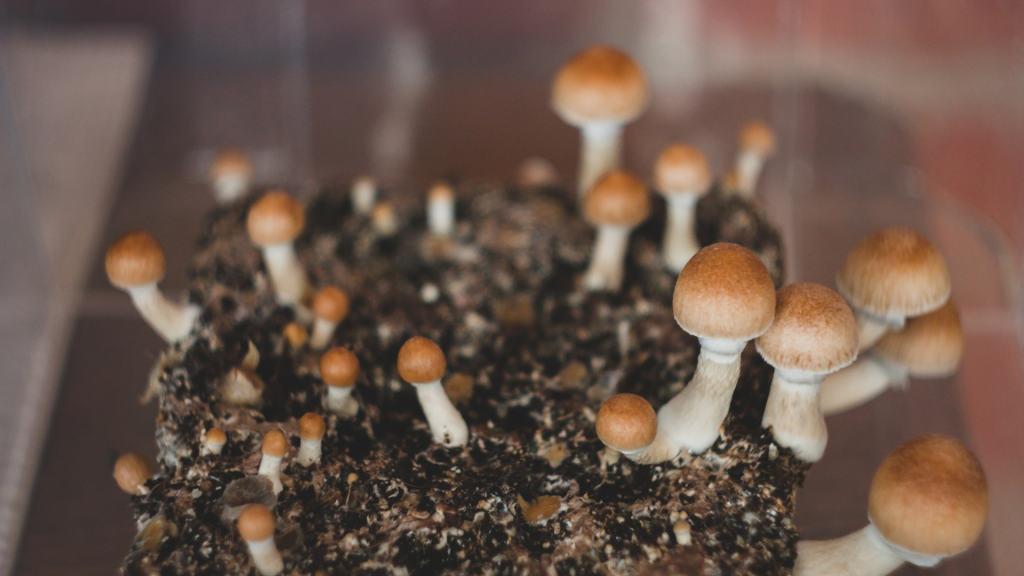
Magic mushrooms (available with Offerings) might sound mysterious, but they’re just certain types of fungi that naturally make psilocybin, the compound that causes the trippy effects people talk about. These mushrooms grow all around the world, and even though they look like regular wild mushrooms, they belong to a small group of species that share the same unique chemistry.
Let’s break down what they are in a simple and friendly way.
What “Magic Mushrooms” Really Are
Magic mushrooms aren’t one single mushroom. They’re a group of species that contain psilocybin. Britannica describes them as mushrooms that “contain the hallucinogenic compounds psilocybin and psilocin,” which is exactly what gives them their well known effects.
Most of these species fall under a few main genera:
• Psilocybe
• Panaeolus
• Conocybe
• Gymnopilus
The most famous one is Psilocybe cubensis. NCBI even lists its common name as “magic mushroom,” which makes sense because it’s the species most people recognize and use.
The Big Names in the Magic Mushroom World
Psilocybe cubensis
Probably the most popular of all. Golden caps, thick stems, and found in warm, humid areas. If someone says “shrooms,” they’re usually talking about this one.
Psilocybe semilanceata
Also known as Liberty Caps. These are small, pointy, and grow in grassy fields. They’re one of the most potent species out there.
Psilocybe cyanescens
These get the nickname Wavy Caps because of the wavy shape of their tops. They’re strong too and often grow on wood chips in parks or gardens.
ScienceDirect notes that psilocybin shows up in “at least 15 species of mushrooms” across several genera, so the magic mushroom family is bigger than people think.
Why People Care About Magic Mushrooms
Even in scientific journals, psilocybin mushrooms get attention not just for the trip, but for the possible mental benefits. Researchers have looked at them for:
• mood improvements
• emotional openness
• lower anxiety
• feeling more connected or grounded
The effects don’t work the same for everyone, but people often describe the experience as meaningful, refreshing, or eye opening.
And while the article isn’t about dosing or harm reduction, it’s worth saying that most of the benefits show up in supportive, calm settings with the right mindset.
How They Actually Work
Inside your body, psilocybin turns into psilocin, which interacts with serotonin receptors in the brain. This shift in activity is what changes how you see colors, hear sounds, feel emotions, or think about yourself.
Even though that sounds scientific, the actual experience usually feels much more natural, like the mind is loosening up and letting things flow differently.
Summary
Magic mushrooms are species of fungi that naturally contain psilocybin, mainly from genera like Psilocybe, Panaeolus, and Conocybe. The most well known species include Psilocybe cubensis, Psilocybe semilanceata, and Psilocybe cyanescens.
Magic mushrooms aren’t one type but a group of species that produce psilocybin. The most famous ones come from the Psilocybe family, especially Psilocybe cubensis. People value them for their effects on perception and the potential emotional and mental shifts they can bring. They grow all over the world and have become part of scientific research as well as cultural conversation.
Sources
Encyclopaedia Britannica – Psilocybin Mushroom
NCBI Taxonomy Browser – Psilocybe cubensis
ScienceDirect – Psilocybe Overview