If you’ve ever wondered what’s going on in your brain after taking magic mushrooms, you’re not alone. People talk about the colors, the feelings, the strange clarity, but underneath all that, something truly remarkable is happening. Psilocybin, the active compound in these mushrooms, doesn’t just make you see the world differently, it changes how your brain itself is wired, even if only for a while.
Here’s what scientists have discovered, and why it’s reshaping how we understand the mind.
Psilocybin: The Key That Fits the Brain’s Locks
Psilocybin is converted in the body to psilocin, a molecule that looks almost identical to serotonin, the brain’s “feel-good” chemical. Because of that, psilocin fits perfectly into serotonin receptors, especially one called 5-HT2A.
That’s the moment the trip begins. When psilocin binds to those receptors, normal patterns of communication between brain regions start to loosen. Connections that usually stay separate begin talking to each other.
“It’s like the brain’s traffic lights all turn green at once, signals move freely where they normally wouldn’t.”
This sudden surge in cross-talk is what gives rise to the strange but meaningful sensations, intense visuals, deep emotional waves, and that feeling that everything is somehow connected.
The Default Mode Network: When the Ego Takes a Break
The default mode network (DMN) is a group of brain regions active when you’re thinking about yourself, your memories, your worries, your identity. It’s where most of our mental “noise” lives.
Studies from NIH (2024) and Carhart-Harris et al. (2025) show that psilocybin temporarily quiets the DMN. That’s why people often describe a loss of ego or self-boundaries. Without the DMN dominating, your brain shifts into a more open, interconnected state.
For someone struggling with depression or anxiety, that break from self-rumination can feel like freedom.
“It wasn’t that my problems vanished, they just stopped being the only thing I could see.”
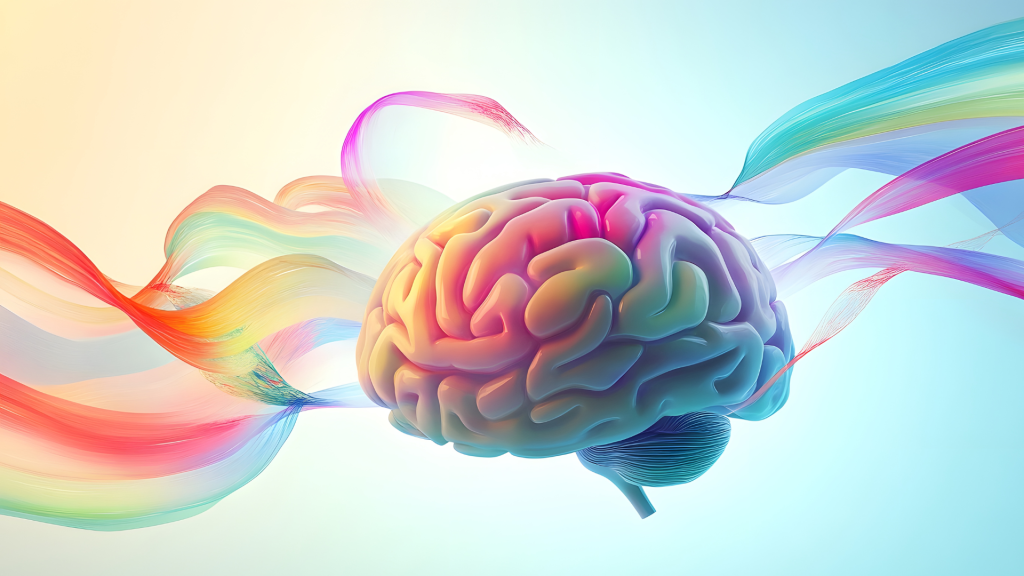
The Brain on Psilocybin Looks More Connected
Imaging studies, especially fMRI, show that psilocybin increases connectivity between brain regions that don’t usually communicate. Visual centers start linking with memory and emotion areas, which explains why sounds might look like colors or why a single thought can feel profound.
The Frontiers in Systems Neuroscience (2025) review described psilocybin as a “network rebalancer.” It doesn’t add new pathways, it lets the brain temporarily reorganize itself. Afterward, when the drug wears off, the brain doesn’t go back exactly the same. It keeps some of that flexibility, which may explain the long-term mood improvements seen in studies.
Neuroplasticity: A Brain Ready to Change
One of psilocybin’s most exciting effects is its boost to neuroplasticity, the brain’s ability to grow and form new connections. Researchers have found that psilocybin increases levels of BDNF (brain-derived neurotrophic factor), a protein linked to learning and memory.
That means the brain isn’t just “tripping”, it’s actively rewiring. People who undergo psilocybin therapy often describe new insights and lasting emotional clarity, and now we know why: their brains literally become more adaptable for a while.
“It felt like my brain hit the reset button and came back online softer, calmer, and more flexible.”
Emotional and Therapeutic Effects
Beyond visuals and patterns, psilocybin impacts the emotional centers of the brain, like the amygdala, which controls fear and stress. Studies show psilocybin reduces overactivity there, leading to a calmer baseline even weeks after the experience.
That might explain why patients in clinical trials often report a persistent reduction in anxiety and depression symptoms after just one or two sessions. It’s not that psilocybin erases the emotion, it helps people face it from a different angle.
“I cried, not because I was sad, but because I finally understood why I’d been carrying the sadness.”
Creativity and Consciousness
The loosening of brain boundaries also sparks creativity. Artists, writers, and thinkers have long said psychedelics help them see connections that weren’t visible before. From a scientific perspective, this makes sense: when brain regions interact more freely, ideas combine in ways they usually can’t.
That’s why many users describe flashes of insight, problem-solving breakthroughs, or deep self-reflection. The brain becomes, for a time, a more open playground for thought.
The Afterglow
Even after the trip ends, many people report what researchers call the “afterglow”, a period of emotional clarity, peace, and connectedness that can last days or even weeks. MRI studies show that during this time, brain networks remain more balanced and flexible than before.
This temporary harmony may be what gives psilocybin its therapeutic edge, it helps the brain “remember” what balance feels like.
So, What Does Psilocybin Really Do to the Brain?
It connects what’s disconnected. It quiets what’s too loud. It gives your brain a chance to reorganize itself around presence, curiosity, and calm.
For all its mystery, the science is clear: psilocybin doesn’t just alter perception, it enhances the brain’s ability to change.
“The trip ends, but the shift stays.”
Summary
Magic mushrooms affect the brain by mimicking serotonin, quieting the default mode network, and increasing communication between brain regions. They boost neuroplasticity, reduce fear responses, and promote emotional balance. The experience is temporary, but its benefits often last far beyond the trip.
Sources
Carhart-Harris, R. et al. – 2025 – Neurocognitive Effects of Psilocybin: A Systematic and Comprehensive Review of Human Neuroimaging Studies
Adeyinka et. al. – 2025 – Neurobiology of Psilocybin: A Comprehensive Overview and Comparative Analysis
NIH – 2024 – How Psychedelic Drugs Alter the Brain
Read Our Other Articles