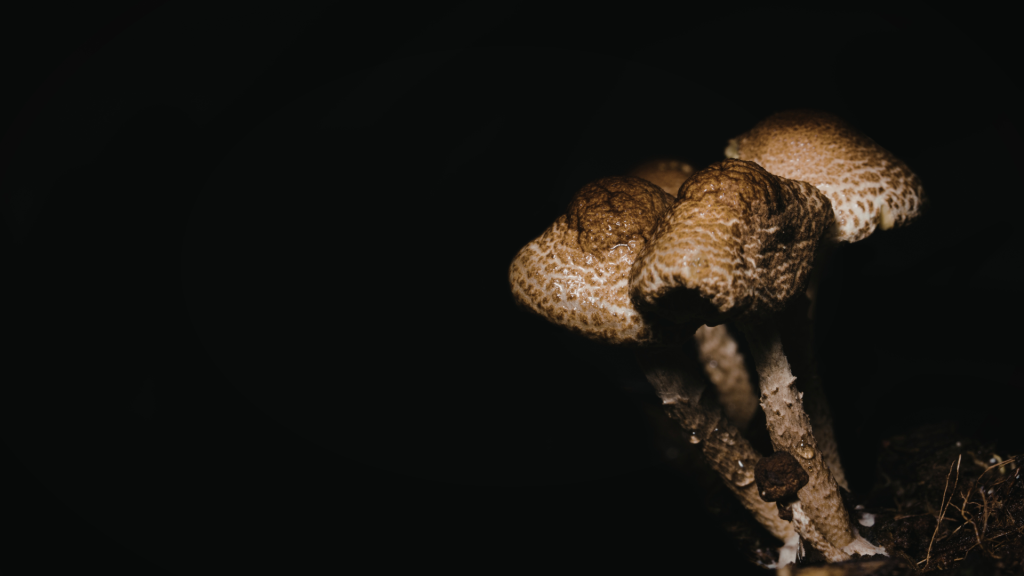
Magic mushrooms might grow naturally, but in the eyes of U.S. law, they’re treated like some of the most dangerous drugs on Earth. Despite their potential for therapy and their growing acceptance in research, psilocybin, the active compound in magic mushrooms, is still federally illegal.
Here’s why that happened, what’s changing, and a few surprising details along the way.
The Law: Schedule I
Psilocybin is classified as a Schedule I substance under the Controlled Substances Act of 1970. That’s the same category as heroin, LSD, and MDMA.
According to the Drug Enforcement Administration (DEA), a Schedule I drug means it:
- Has a high potential for abuse
- Has no currently accepted medical use in treatment
- Lacks accepted safety for use under medical supervision
That legal definition locks psilocybin out of medical or over-the-counter use, even though modern research clearly shows potential benefits for depression, PTSD, and anxiety.
In other words, under federal law, psilocybin is officially as dangerous as heroin, but scientifically, it’s not even close.
How It Became Illegal
Magic mushrooms weren’t always considered taboo. In the 1950s, researchers like R. Gordon Wasson and Albert Hofmann were studying psilocybin in therapeutic contexts. Then the 1960s happened.
As psychedelics like LSD and shrooms became linked with counterculture, anti-war protests, and the hippie movement, public sentiment shifted. In 1970, President Richard Nixon signed the Controlled Substances Act, grouping all hallucinogens, including psilocybin, into Schedule I.
“They didn’t ban mushrooms because of science. They banned them because of politics.”
Why It’s Still Illegal
The simple answer: federal bureaucracy moves slowly.
To change psilocybin’s status, the DEA and FDA need convincing evidence that it’s safe, effective, and medically valuable. While new studies are promising, the research is still considered too limited for full approval.
The Government Accountability Office (GAO) noted in 2024 that the DEA’s process for granting research exemptions is slow and inconsistent. Scientists have to apply for special licenses just to handle psilocybin, sometimes waiting months or years for approval.
That makes it harder to gather the very data needed to reclassify it.
So psilocybin stays Schedule I partly because it’s hard to study, and it’s hard to study because it’s Schedule I.
Exceptions and Loopholes
While federal law says “no,” a few cities and states have started saying “maybe.”
- Oregon legalized psilocybin therapy in 2020 for supervised medical use.
- Colorado decriminalized personal possession in 2023.
- Cities like Denver, Oakland, and Seattle made psilocybin among their lowest law-enforcement priorities.
These changes don’t override federal law, but they show shifting public opinion.
At the federal level, the FDA granted psilocybin “Breakthrough Therapy” designation for depression treatment, fast-tracking clinical trials. That’s a major step, even if legalization is still years away.
Interesting Facts
- Possessing psilocybin spores isn’t technically illegal in many states because the spores don’t contain psilocybin, until you grow them.
- The DEA seized over 230 kilograms of psilocybin mushrooms in 2023, a sharp increase compared to five years earlier.
- Despite being illegal, psilocybin was one of the most requested substances for medical exemptions in 2024, mainly for end-of-life anxiety and PTSD.
“The law says no, but the science keeps saying maybe yes.”
What Could Change Next
If psilocybin continues to show clinical success, it could be rescheduled, moved from Schedule I to Schedule II or III. That would let doctors prescribe it under controlled conditions, similar to how ketamine and opioids are handled today.
Experts expect the FDA could approve a prescription psilocybin therapy as early as 2026 or 2027 if ongoing trials succeed.
That wouldn’t make magic mushrooms fully legal for recreational use, but it would mark a huge shift after more than 50 years of prohibition.
So, Why Are Magic Mushrooms Still Illegal?
Because under federal law, psilocybin is considered a high-risk drug with no medical use, based on policies written during the 1970s “War on Drugs.” New research suggests otherwise, but legal change hasn’t caught up yet.
Until federal reclassification happens, shrooms remain illegal in most of the U.S., even though state and scientific attitudes are starting to flip.
Final Thoughts
Magic mushrooms were outlawed in a wave of cultural fear, not medical fact. Half a century later, the data tells a different story: they’re far less harmful than many legal drugs and show real potential for healing.
The U.S. is slowly waking up to that. For now, psilocybin sits in legal limbo, a natural substance waiting for the law to catch up with science.
“It’s funny how something that grows in the dirt is considered more dangerous than something brewed in a lab.”
Sources
Drug Enforcement Administration – 2020 – Drug Fact Sheet: Psilocybin
University of California, Berkeley BCSP – Psychedelics, the Law and Politics
Government Accountability Office – 2024 – Drug Control: DEA Should Improve Its Religious Exemption Process for Schedule I Substances
Read Our Other Articles